Don Lemon Church Protest: When Mockery Masquerades as Moral Courage
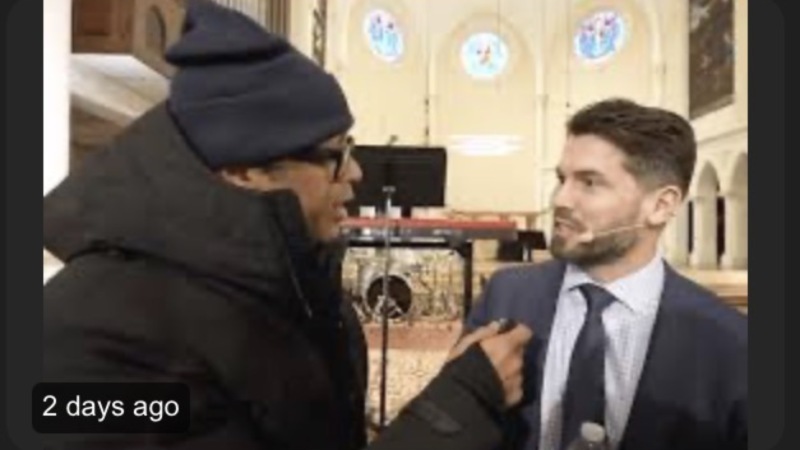
The recent church protest involving Don Lemon (chatgpt://generic-entity?number=0) was not an act of justice, reform, or prophetic confrontation. It was a calculated display of cultural hostility toward Christianity—packaged as activism, amplified by media credibility, and executed without accountability.
Let’s be clear: this was not “speaking truth to power.”
This was power speaking down to faith.
Protest or Provocation?
A protest implies grievance rooted in oppression or abuse. What unfolded here was provocation—targeting the Church not because it holds institutional dominance, but because it dares to retain moral convictions that conflict with prevailing cultural narratives.
No buildings were stormed. No sermons were engaged in dialogue. No doctrine was challenged with substance. Instead, the Church was treated as a caricature—something to be shamed, mocked, or publicly disrupted for symbolic effect.
That is not courage. That is contempt.
Why the Church?
The modern media ecosystem thrives on spectacle, and Christianity remains one of the few institutions still expected to absorb ridicule quietly. Politicians are protected. Corporations are insulated. But the Church? It’s considered fair game—regardless of its charitable works, community impact, or theological nuance.
This protest was not about accountability. It was about signaling allegiance to a cultural elite that views biblical Christianity as obsolete, restrictive, or dangerous simply because it refuses to evolve on command.
The Selective Outrage Problem
Here is the uncomfortable question no one wants to answer:
Why is the Church consistently targeted, while other belief systems are treated as untouchable?
The answer is not moral consistency—it’s cultural leverage.
Christianity is expected to turn the other cheek while being slapped repeatedly in the public square. And when believers respond with restraint, that restraint is rebranded as weakness. When they respond with conviction, it’s labeled hate.
Either way, the outcome is pre-decided.
What This Reveals
This moment exposes more about media culture than it does about the Church.
It reveals a growing intolerance toward dissenting moral frameworks.
It reveals a preference for disruption over dialogue.
And it reveals a discomfort with any authority not rooted in self-definition.
The irony is unavoidable: a protest framed as liberation ends up reinforcing ideological conformity.
The Church’s Responsibility—Not Retreat
This is not a call for silence, nor is it a call for retaliation.
The Church does not need to beg for acceptance or soften its convictions to appease public figures. It needs clarity. Backbone. Discernment.
Christ never promised cultural approval. He promised resistance.
And history has shown—repeatedly—that when the Church is pressured, mocked, or marginalized, it doesn’t disappear. It refines.
Final Word
This protest was not prophetic. It was performative.
It was not brave. It was protected.
And it was not progress—it was posture.
The Church has survived empires, executions, censorship, and exile.
It will survive media moments too.
The real question is not whether the Church can withstand criticism.
It’s whether the culture can tolerate conviction it cannot control.
— Remnant Radio